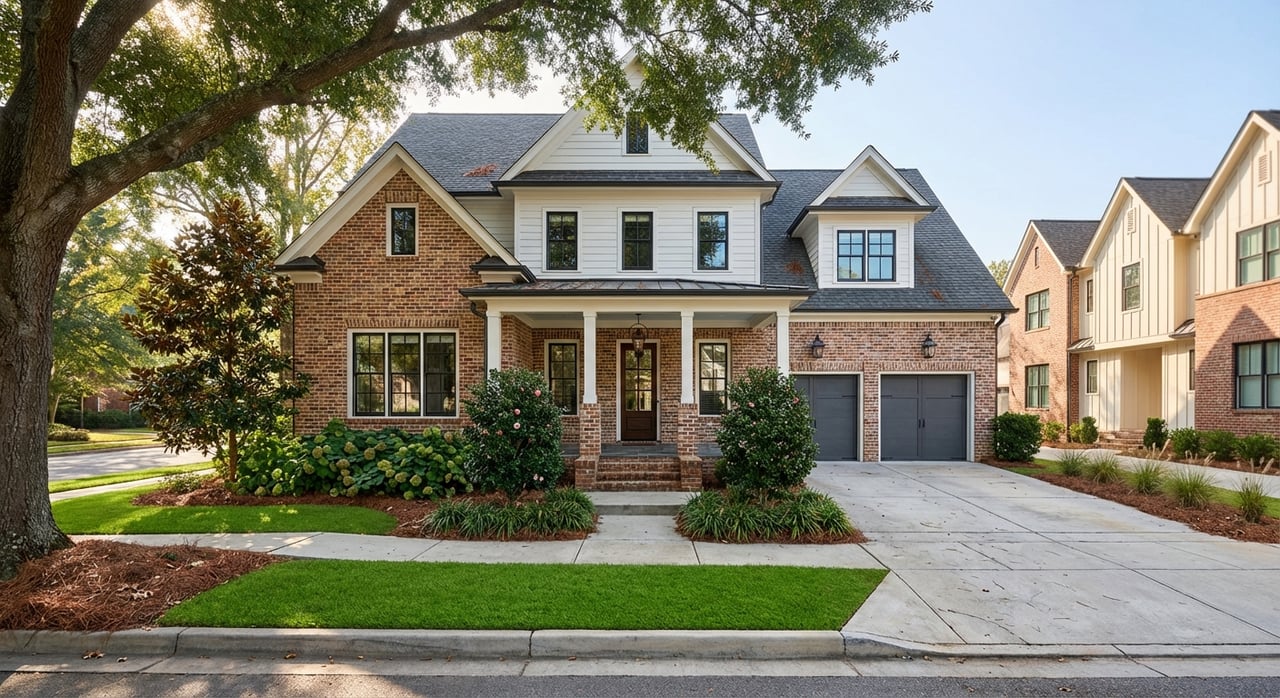
Relocating to Raleigh Housing: Options and 2026 Price Trends
February 19, 2026
February 19, 2026
Thinking about relocating to Raleigh and trying to make sense of home prices and neighborhoods? You’re not alone. The Triangle continues to attract professionals and families who want strong job growth, everyday convenience, and a range of home styles. In this guide, you’ll see what you can buy by home type, how prices trend across Raleigh and Wake County, and how to match locations to your lifestyle and commute. Let’s dive in.
Raleigh’s typical home value sits around $424,925 based on Zillow’s Home Value Index for the city (ZHVI, Dec 31, 2025). Wake County as a whole trends higher, with a countywide ZHVI near $472,848 on the same date. MLS-based medians can differ: Redfin reports a Wake County median sale price of about $450,000 (Jan 2026), and Realtor.com placed Raleigh’s median near $445,000 as of December 2025.
Across sources, you’ll see small differences because they measure different things. The bigger story is the tone of the market. Inventory and days on market have risen from the 2020 to 2022 peak frenzy, and many areas feel closer to balanced today. Local coverage in early 2026 echoes that moderation in the Triangle market, with neighborhood-by-neighborhood variation still in play, as noted by recent regional reporting on what’s next for the Triangle housing market in 2026 (Axios).
City and county numbers move together, but county medians often run higher due to popular suburban hubs like Cary, Apex, and Holly Springs. Inside-the-Beltline enclaves with historic homes and strong walkability also post higher price points. When you compare options, keep both your target neighborhood and your commute in mind.
Data note: Figures cited above are from ZHVI (Dec 31, 2025), Redfin MLS medians (Jan 2026), and Realtor.com (Dec 2025).
If you want a yard and more space, single-family homes dominate North Raleigh and many suburban Wake communities. Citywide medians for detached homes tend to land in the mid to upper $400Ks, with inside-the-Beltline and historic neighborhoods commonly higher. Larger lots and newer subdivisions become more common as you move beyond I-440.
Townhomes bridge value and convenience. You’ll find them in midtown, new infill pockets, and suburban nodes near retail and parks. Typical prices often run from the low $300Ks to the mid $400Ks, with premiums for central locations or new construction. Many buyers like the lower-maintenance lifestyle and proximity to daily needs.
Condos cluster downtown in places like the Warehouse District, Glenwood South, and Smoky Hollow, and in mixed-use centers such as North Hills. Smaller units can fall in the mid $200Ks to $300Ks, while newer or luxury buildings often reach higher price per square foot. If walkability and a lock-and-leave setup top your list, this segment is worth a look.
New-build homes and townhomes are common in Apex, Holly Springs, Fuquay-Varina, and Wake Forest. Entry pricing often begins in the low to mid $300Ks for townhomes or smaller plans and scales into the $500Ks and above for larger single-family homes. After a building surge, local reporting shows permit activity softened in 2024 and 2025, which can shape future supply and prices (Axios report on construction activity).
If you want restaurants, nightlife, and short walks to offices in the core, start here. Inventory leans condo and townhome, with higher price per square foot for newer buildings and amenity-rich towers. It’s a good fit for buyers who prioritize a car-light lifestyle and quick access to city events.
This mixed-use district blends shopping, dining, offices, and nearby single-family neighborhoods. You’ll find condos and townhomes near the core, with traditional homes slightly farther out. Prices tend to run above the city median due to location and amenities.
Historic character, tree-lined streets, and strong central access define these in-town areas. Many homes trade above average Raleigh prices, especially renovated properties or larger lots. Inventory can be tight, so plan ahead if you’re targeting a specific style or street.
Newer subdivisions, proximity to RDU, and access to major roads make this area popular with frequent travelers and RTP professionals. You’ll see a mix of single-family homes, townhomes, and pocket neighborhoods with community amenities. Value often compares well with closer-in historic areas.
Expect more single-family options, master-planned communities, and new construction. Commute times vary by your destination, but these towns often offer a balance of space, amenities, and price. If you split work between downtown Raleigh and RTP, these corridors can be a practical middle ground.
RTP is one of the region’s largest job engines, with more than 55,000 employees across hundreds of companies (Research Triangle Park). If you want to shorten that drive, focus on west or northwest Raleigh, Cary, Morrisville, and parts of south Raleigh.
The average one-way commute in the Raleigh-Cary metro runs about 26 to 27 minutes, though real-world times vary by route and hour (U.S. Census ACS guidance). Key roads include I-40, I-440, I-540, Capital Boulevard, Glenwood Avenue, Six Forks Road, and New Bern Avenue. If you’re mapping options, use live tools and test at peak times; this local overview helps you visualize the city’s layout and major corridors (This is Raleigh).
For transit, GoRaleigh and GoTriangle run local and regional bus routes, park-and-ride options, and links to RDU, while Amtrak serves intercity trips from Raleigh Union Station. You can review airport connections and planners on the regional site (GoTriangle airport connections). Commuter rail is discussed regionally but is not a near-term substitute for most daily car commutes today.
Steady population and job growth support long-term housing demand. North Carolina’s Office of State Budget and Management reports Raleigh surpassed 500,000 residents in 2024 (NC OSBM). Regionally, the market has cooled from the pandemic’s peak pace and looks closer to balanced overall, with certain neighborhoods and new-build offerings still drawing quick interest (Axios market outlook).
Ready to compare neighborhoods, test commutes, or tour homes virtually and in person? For a calm, high-touch process tailored to your move, connect with Kim Longest to Request Your Free Relocation & Neighborhood Guide.
Stay up to date on the latest real estate trends.


Get assistance in determining current property value, crafting a competitive offer, writing and negotiating a contract, and much more. Contact Kim today to discuss all your real estate needs!
Get In Touch With Me To Learn More
1991 APEX PEAKWAY
APEX NORTH CAROLINA 27502