Clayton's ETJ Line Hasn't Moved Since 2008. Everything Around It Has.
September 17, 2026
September 17, 2026
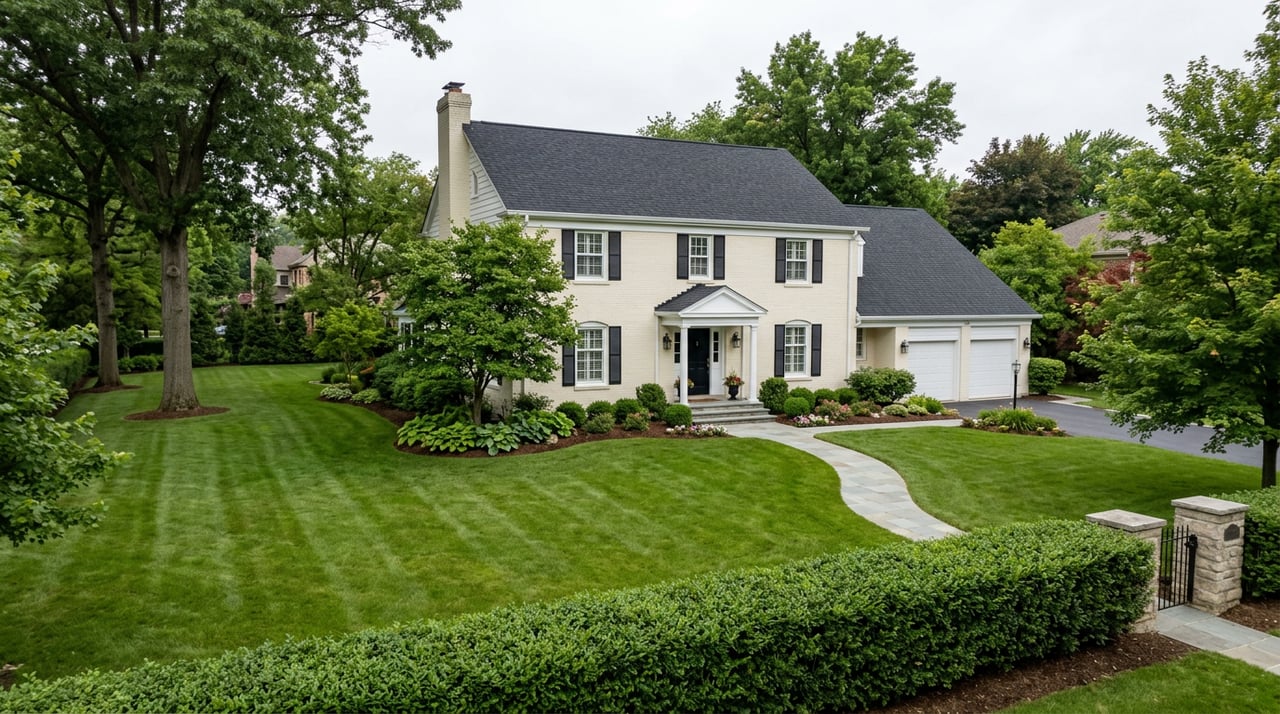
Picture two driveways less than a mile apart on the edge of Clayton. Same builder era, same brick-and-siding look, same asking price on the portal. One sits inside the Town of Clayton's actual corporate limits. The other sits just outside it, in unincorporated Johnston County. From the street they're indistinguishable. From a closing statement, they are not even close.
The line that separates them is not a school district boundary or a subdivision gate. It's the Town of Clayton's extraterritorial jurisdiction, or ETJ, a two-mile buffer the Town Council adopted on March 3, 2008. The Town has annexed new neighborhoods into its corporate limits every year since. The ETJ ring around it has not moved once. That mismatch, a growing town inside a frozen boundary, is the mechanism most buyers never think to check, and it changes your tax bill, your water source, and who you call when a permit goes sideways.
The ETJ is a planning tool, not a tax boundary. Inside it, Clayton enforces its own zoning and building regulations on land the town does not otherwise own. That means a lot two miles outside the corporate limits can still be subject to Clayton's setback rules, its subdivision ordinance, its permitting review, all without that property paying a cent of Clayton's municipal tax rate or receiving Clayton water, sewer, or police service. The Town's own explanation of the ETJ is direct about the split: development regulation follows the ETJ, but town services and town taxes only follow actual annexation.
That distinction matters because Clayton hasn't been able to annex land on its own initiative since 2011. Under current North Carolina law, a property becomes part of the Town only two ways: the General Assembly acts, or every single property owner in the area signs a voluntary annexation petition. There is no partial buy-in. A block where nine of ten owners want in and one holds out stays out, at least for now.
Petition annexation into Clayton runs through a defined process, and it is not a fast one. The Town's planning department reviews submissions on a rolling basis, with an initial 15-business-day review cycle and three separate Town Council hearings built into the schedule. The Town's own guidance sets realistic expectations at a minimum of two to three months from application to approval, longer if the parcel sits outside the Claytex Fire District, since state law requires the Town to notify that district and negotiate a payment covering the land's proportional share of fire district debt before the annexation can close.
That fire district wrinkle is easy to miss and expensive to discover late. If you're buying land with an eye toward petitioning for annexation after closing, or a builder is promising town utilities are "coming soon" to a parcel just outside the line, the Claytex Fire District notification and debt buyout requirement is one more reason that timeline can run long.
Here's how the three positions actually compare on the ground:
| | Inside Town Limits | Inside ETJ Only | Unincorporated, Outside ETJ | |---|---|---| | Who enforces zoning and building permits | Town of Clayton | Town of Clayton | Johnston County | | Town water and sewer available | Typically yes | Not automatic | No | | Pays Clayton's $0.49 municipal tax rate | Yes | No | No | | Fire protection | Town of Clayton Fire | Often a rural fire district (Claytex, Corinth-Holders, and others) | Rural fire district | | Path to change status | Already in | Petition annexation (100% owner sign-off) or state action | Petition annexation, same rules |
Inside Clayton's corporate limits, the Town's own published rate is $0.49 per $100 of assessed value, layered on top of the county's rate for a combined total the Town itself calculates at roughly $1.01 per $100. On a $400,000 assessed home, that combined rate lands in the neighborhood of $4,000 a year, not counting any fire service district add-on some in-town parcels still carry.
Step outside the corporate limits and that municipal $0.49 disappears, but it's replaced by a fire district levy, and those levies aren't uniform. Johnston County's approved subdivision filings alone name Claytex, Corinth-Holders, 50/210, Meadow, McLemore, Wynn, O'Neals, and Wilsons Mills as separate rural fire districts operating around Clayton, and their rates don't move in lockstep with the Town's. It's entirely possible for a home a few miles from downtown Clayton to land on a combined county-plus-fire-district rate that's lower than the in-town total, or one that's higher, depending entirely on which district's boundary the parcel happens to fall inside. The only way to know which side of that math you're on is to check the specific parcel, not the town name on the listing.
One more wrinkle worth flagging to anyone comparing bills from different years: Johnston County's rates are re-adopted every June for the fiscal year that follows, and the county's assessed values reset on a multi-year revaluation cycle, with the last one effective January 1, 2025. A tax bill you find online from even a year ago may already be describing a rate the county has since changed. Confirm the current figure directly with the Johnston County Tax Office before you build it into an offer.
Tax rate is the number buyers ask about. Utility infrastructure is the number that actually determines your closing costs and your first five years of maintenance calls.
Inside Clayton's service area, the Town's Water Resources Department maintains more than 146 miles of water line and 173 miles of sewer line serving roughly 28,000 residents. That's the system a town-limits property taps into, usually for a defined connection fee.
Outside that footprint, in the ETJ or fully unincorporated Johnston County, the default is a private well and septic system, and Johnston County Environmental Health, not the Town, handles the permitting for it. That split shows up directly in the process: for lots not served by public sewer, Johnston County requires its own site evaluation and permit before a foundation goes in, a process we've walked through in more detail in our step-by-step guide to building new near Clayton.
The cost gap between the two paths is not small. Across the Triangle, adding a private well and septic system to a new build typically runs $18,000 to $45,000 more than paying municipal tap fees, which usually land between $3,000 and $13,000. Clayton's own soil doesn't make this easier. The area sits in Piedmont clay country, largely Cecil and Helena series soils, which push many modern septic installs toward low-pressure-pipe or pressure-dosed designs rather than the cheaper conventional gravity system, specifically because that clay drains more slowly than the sandy soils you'd find further east toward Smithfield or Selma.
Johnston County's 2025 approved subdivision records make the fire district patchwork concrete. Plats filed in O'Neals Township that year list the Corinth-Holders Fire District and the Clayton Rescue Squad as the responding service. A subdivision in Pleasant Grove Township lists the 50/210 Fire District instead. Filings in Meadow Township point to the Meadow Fire District and Benson Rescue Squad, while Cleveland Township filings name the McLemore Fire District. These aren't archived boundaries from decades ago. They're the districts the county assigned to subdivisions platted around Clayton in 2025, and each one carries its own rate and its own response agreement, layered on top of whatever the county levies countywide.
Before you get attached to a specific address, a few checks take less time than a single showing:
If a listing describes itself simply as "Clayton," it's worth asking the agent whether that means inside the corporate limits or somewhere in the ETJ ring around it. And if annexation ever comes up as a selling point, "close to town utilities" and "on town utilities" are two very different promises. One of them can take months and a fire district buyout to become true. The other already is.
The town line looks invisible on a drive-by. It is not invisible on a closing statement. If you're comparing homes anywhere near Clayton's edge and want a second set of eyes on which side of that line a specific address falls, Kim Longest can walk the parcel-level details with you before you write the offer, not after.
Stay up to date on the latest real estate trends.


Get assistance in determining current property value, crafting a competitive offer, writing and negotiating a contract, and much more. Contact Kim today to discuss all your real estate needs!
Get In Touch With Me To Learn More
1991 APEX PEAKWAY
APEX NORTH CAROLINA 27502